College enrollment decline among Black men sparks concerns, experts warn
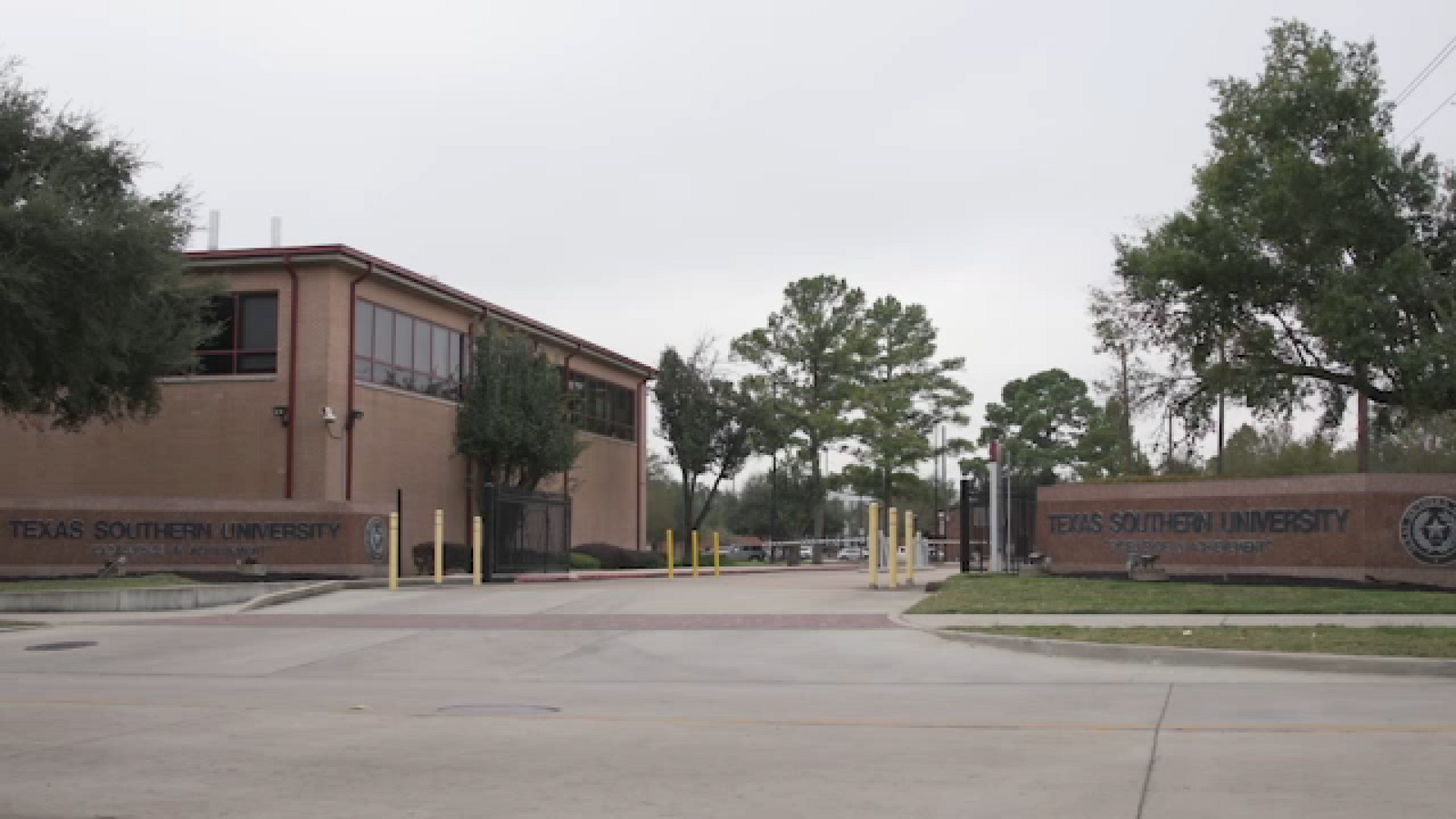
HOUSTON, Texas (KTRK) -- Black men are enrolling in college at far lower rates than they once did, and experts are warning the decline carries consequences beyond the campuses of higher education. Government data shows Black women are attending college at nearly twice the rate of Black men, creating a gender gap that expands into local communities.
Darius Mackey, a student at Texas Southern University, said he grew up in the Sunnyside area without many college-educated role models around him.
"Coming from Sunnyside, it's limited things you can see," Mackey said.
He said that as he entered high school, college did not feel like a likely path.
"I was one of those kids kinda just getting by," Mackey said.
A high school counselor eventually guided him to Texas Southern University, but Mackey said he was unprepared for the environment and failed out.
"It was like someone stepping into a space of the unknown and didn't know how to function in it," he said. "Being a first gen, I didn't know what college really was. I didn't know the benefits or that it could really benefit my life."
Dr. Walter Kimbrough, executive vice president of the United Negro College Fund and a former president of several historically Black colleges and universities, said Black men often face cultural and structural barriers on the path to higher education.
"There has been somewhat this idea that education isn't something that men do," Kimbrough said. "And it's not just Black men, but the gap has been broader."
Kimbrough said the country has not done enough to build a stronger pipeline for young Black men to make it to and through college.
"We haven't done, I think as a nation, a good job of increasing that pipeline to make sure that more young Black men get all the way through," he said.
Dr. Kimbrough also said many Black men who do make it to college struggle to finish, in part because they may not feel seen or valued on campus.
"There's a lot of research for all students that talks about this idea of mattering," Kimbrough said. "And on a lot of campuses, Black men only matter if they're like an athlete. And so how do you just make sure that all Black men, regardless of their involvement on campus, feel like they mattered?"
Some HBCUs are trying to address the issue through programs that give struggling students another chance.
At Texas Southern University, one of those efforts is Project ROAR. Mackey said the program came with strict requirements.
"Once you get in, you have to study three hours a day and keep up with your work," Mackey said. "You have DeWayne Stafford emailing you every day in big red bold letters saying, 'If you don't do this work, you will get kicked out,' and you can't get less than an A or a B."
Mackey entered the program after finishing his freshman year with a 0.5 GPA.
He said his academic and campus involvement have since changed dramatically.
"Now with a 3.3, I am part of two organizations and serve on boards; I have an internship in Charlotte at Bank of America, and I got scholarships!" Mackey said.
Dr. Kimbrough said financial support is another key factor. In his work with UNCF, he said the legal climate has changed how scholarships are structured.
"Based on the legal climate now, you have to really de-race a lot of your scholarships, but you can still make sure that students in those communities know about those scholarships and really, you know, apply to get those opportunities," Dr. Kimbrough said.
Dr. Kimbrough emphasized that the stakes go far beyond individual students.
"It has broad implications for all of society, not just African Americans," Dr. Kimbrough said. "And so that's part of what we have to think about in terms of how do we make higher education and education as a whole something that men still gravitate toward?"
For Mackey, part of the solution is changing what people believe is possible for Black men.
"My whole goal was to change my life but also keep the culture in it," Mackey said. "So wherever I am, I want people to know this is where I'm from, but this is who I am now because I want people to know it's diamonds in the dirt."
Copyright © 2026 KTRK-TV. All Rights Reserved.
Ver nota original ↗
¿Querés un resumen rápido de esta noticia, hecho por nuestra IA?