Wife found guilty of murdering popular SIU forestry professor
Article Summary
- A Jackson County jury found Betty Akamani guilty on two counts of first-degree murder in the Sept. 19 shooting death of her husband, Kofi Akamani.
- Kofi Akamani, a Southern Illinois University Carbondale professor, was a researcher, educator and global leader in forestry.
- Betty Akamani claimed she saw her husband leave her house that day with a gun and that she shot him in self-defense because she feared for her life. But investigators said they found no gun on Kofi Akamani or in his car.
This summary was written by the reporters and editors who worked on this story.
MURPHYSBORO — A jury deliberated for about an hour Thursday before finding the wife of a popular forestry professor at Southern Illinois University guilty on two counts of first-degree murder in his Sept. 19 shooting death.
Prosecutors said Betty Akamani, 35, shot and killed her estranged husband, 48-year-old Kofi Akamani, outside her house in rural Jackson County after he dropped off their daughters following a scheduled visitation spent celebrating one of the girls’ birthdays.

The Jackson County jury also found Betty Akamani guilty of one count of endangering the life or health of a child. She faces up to life in prison. The four-day trial included more than 160 evidentiary exhibits and testimony from about 20 witnesses.
Betty Akamani, whose attorney argued during opening statements that she killed her husband in self-defense, also took the stand. She testified that she saw her husband leave the house that day with a gun, and that she believed he was trafficking their children in public restrooms. But police investigators testified they had found no evidence supporting the abuse claims, and no weapon was located on Kofi Akamani or in his vehicle.
“She did this while their girls were home, she did this while he was leaving the house, and she did this for no reason,” Assistant State’s Attorney Sophia Allen said during closing statements on Thursday.
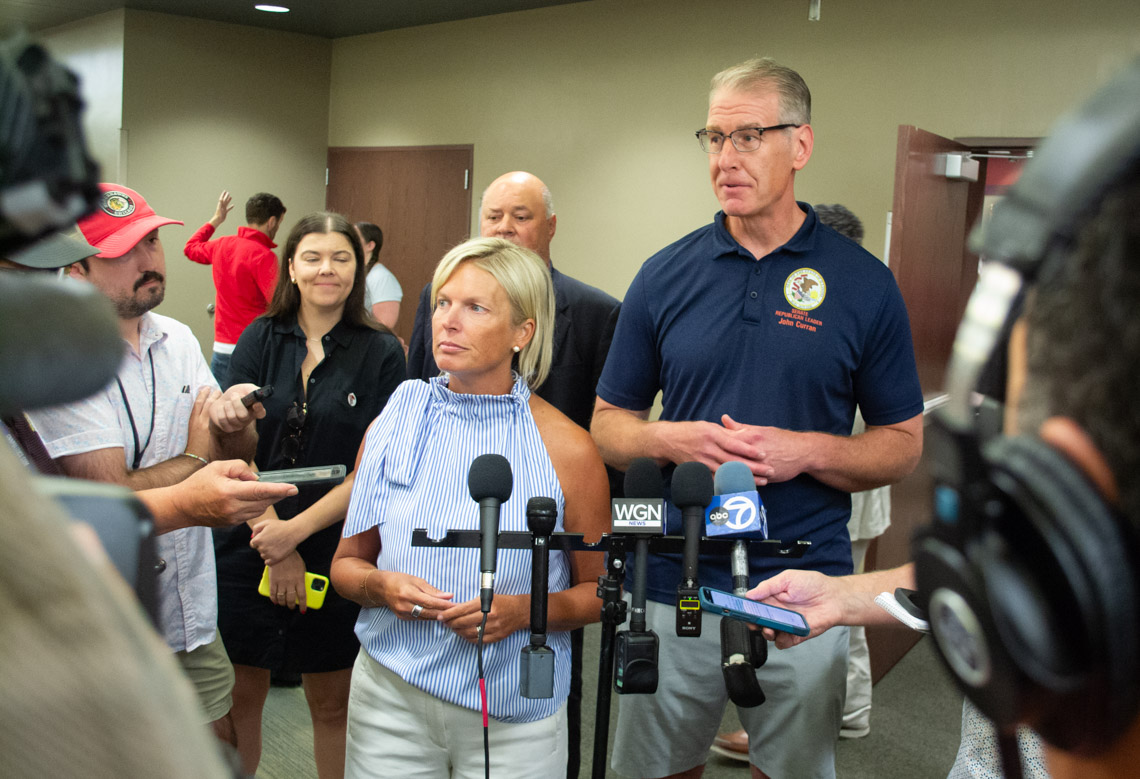
Following the verdict, Solomon Abache, Kofi Akamani’s younger brother, praised prosecutors and the jury.
“Even though it’s not going to bring him back, we are excited that we are able to put this behind us peacefully,” Abache told reporters. “We don’t have to worry about any sort of injustice.”
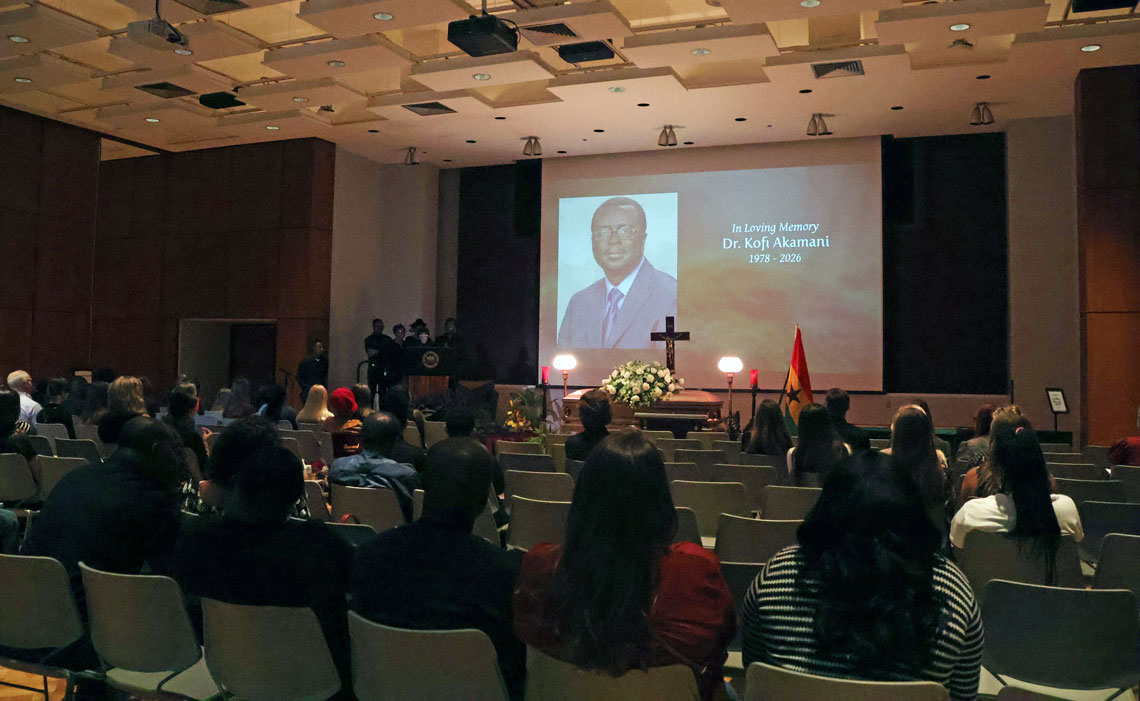
Kofi Akamani, a researcher, educator and global leader in forestry, was honored by his colleagues during a vigil in October and remembered as a supportive, modest teacher who was passionate about his students and the broader southern Illinois community.
Instead of calling police, wife treated herself to $120 lunch
Kofi Akamani filed for divorce in February, and the couple had a court-approved parenting schedule in place. On Sept. 19, Kofi Akamani’s day to spend with the girls, they went to Texas Roadhouse in Marion to celebrate one of the kids’ birthdays, then to Marion Carnegie Library and Starbucks before he returned them to their mother’s home.
Betty Akamani testified that she went to Marion for lunch that afternoon as well, and by coincidence ended up at Texas Roadhouse. She testified that people approached her in the parking lot and told her that her husband was sex trafficking their kids in the bathroom.

The prosecution presented screenshots of security camera footage from Texas Roadhouse and the library, tracing the family’s movements that afternoon. Investigators found no footage of the daughters and their father going to a bathroom at the same time, and no other evidence supporting this claim, they said during the trial.
If Betty Akamani worried that he was trafficking the girls that afternoon, prosecutors questioned why she treated herself to lunch instead of calling police.
The prosecution presented security footage recorded that day from Betty Akamani’s visit to The Turn, a restaurant and bar in Marion. Brianna Hayes, a detective with the Jackson County Sheriff’s Office, testified that Akamani spent around $120 on a meal of filet, shrimp, salad and alcoholic beverages. She appeared calm throughout the visit, rarely checking her phone, Hayes said.
On the day of the shooting, Akamani told police she did not see her husband do anything that afternoon, so she left, according to a video of police questioning her in an interrogation room after the shooting that was presented during the trial.
Before the shooting, the couple fought over the mail
Various witnesses, including Betty Akamani and her children, said the pair had gotten into an argument that afternoon, just prior to Kofi Akamani’s shooting death. Though the couple was separated, Kofi Akamani was still receiving mail at Betty Akamani’s address, which contributed to the argument. During closing arguments Thursday, Celeste Korando, Betty Akamani’s public defender, argued this was a way for Kofi Akamani to control his wife.
Their children testified that their father often came inside the house after visits to retrieve his mail.
Betty Akamani said it was a surprise to her that he came into her home that day. She said her husband was “very angry” and raised his voice at her, though their children testified that they did not hear their father yell.
Akamani said her husband had his hands in his pockets. When he left the house, Betty Akamani said she looked through the keyhole, and Kofi Akamani had a gun in his hand. She said that, as he entered his car, it looked like he was pointing the gun at one of their children’s bedrooms.
“I remember being super, super scared,” she said.
During closing arguments, Korando said Kofi Akamani entered Betty’s home uninvited on the day of his death. She argued Betty believed the circumstances of the incident warranted the use of deadly force.
She said the self-defense claim was “not made up” or “far-fetched.”
But the state argued the self-defense claim was “completely manufactured,” as it did not come until a week after the incident, when Akamani called her sister from Jackson County Jail, saying she needed to hire a lawyer so she could build a self-defense case. She said she and her husband both had guns. On the call, which was presented to the jury Wednesday, Akamani’s sister said no one had mentioned Kofi Akamani also having a gun.
Investigators did not locate a weapon on Kofi Akamani or in his car.
Camera footage from the home, presented to the jury, shows Akamani shooting at her husband from the porch, then going back inside to reload before firing again as he screamed for help. She then called 911 and told dispatch she did it because Kofi Akamani was trafficking their daughters.
Both children testified Tuesday that their father had never been sexually abusive, and police also testified that prior claims that Betty Akamani made that her husband had abused the girls had been thoroughly investigated and deemed unfounded. They dated back to 2017, prosecutors said, when Betty Akamani discovered her husband had a bank account she didn’t know about.
One child took a recording of the shooting from her bedroom window, which was presented to the jury. The child testified that they started recording to show someone so their father could be granted custody. Kofi Akamani’s visitation days were limited to Wednesdays and Fridays, while Betty Akamani had them for the rest of the week.
During a forensic interview conducted by the Perry-Jackson Child Advocacy Center after the shooting, the couple’s other daughter was asked whether either parent ever made her feel scared or uncomfortable. She responded that her mother had, according to a recording of the interview presented during the trial.
When asked in the interview whether she would have expected someone to do something like that to her dad, the child said no, and that Kofi Akamani “was the nicest person on planet Earth.”
Editor-in-Chief Carly Gist can be reached at [email protected] or on Instagram @gistofthestory
This story was produced by the Daily Egyptian and Southern Illinois Source, the Illinois Press Foundation’s nonprofit news collaborative serving the bottom third of the state.
Capitol News Illinois is a nonprofit, nonpartisan news service that distributes state government coverage to hundreds of news outlets statewide. It is funded primarily by the Illinois Press Foundation and the Robert R. McCormick Foundation.
Ver nota original ↗
¿Querés un resumen rápido de esta noticia, hecho por nuestra IA?